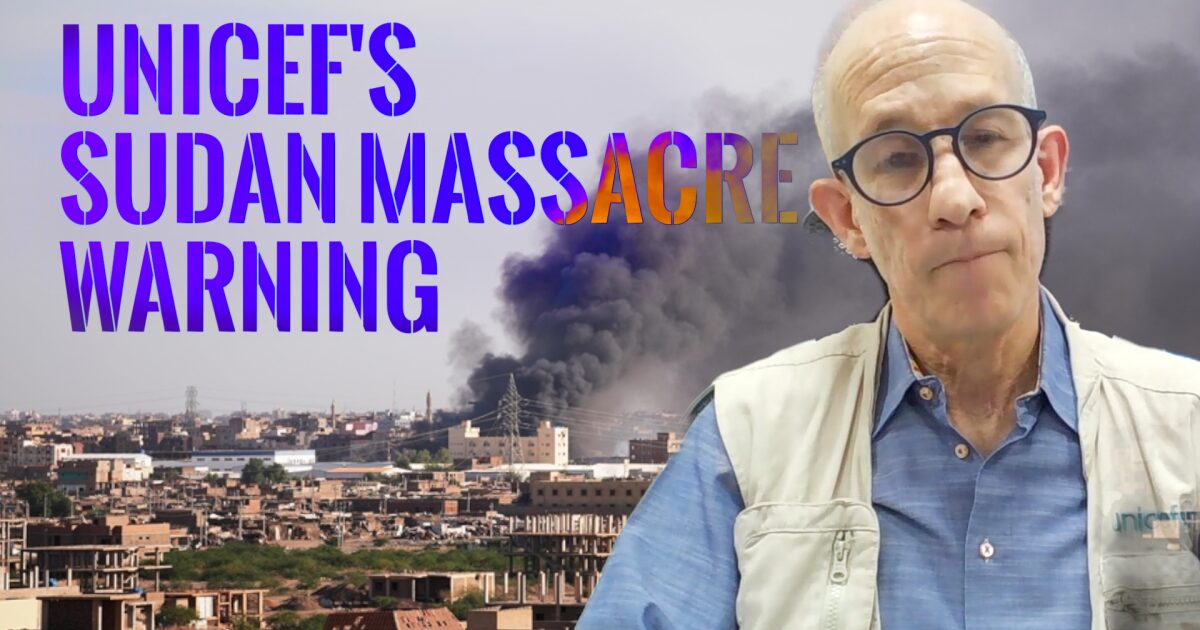
In December, families fleeing the conflict in Sudan's capital, Khartoum, found refuge with their children safe and cared for. However, six months later, the situation has drastically changed, raising urgent concerns about the safety of children in the region.
The focus has shifted to El Obeid, the capital of North Kordofan, which is now a critical supply point for the Sudanese army. The paramilitary group, Rapid Support Forces (RSF), has surrounded the city, prompting the United Nations to issue a stark warning that approximately 500,000 civilians in El Obeid and its vicinity are at imminent risk of widespread violence.
Sheldon Yett, UNICEF's representative in Sudan, spoke from Khartoum about the deteriorating humanitarian situation. When asked if the designation of the world's worst humanitarian crisis still held, he affirmed that it was more applicable than ever. "This conflict has become worse by the day. The front lines continue to move, continue to expand," Yett stated.
The expansion of conflict zones is particularly concerning for those tasked with safeguarding children in Sudan. United Nations officials have likened the current situation in El Obeid to the massacre in El Fasher, Darfur, where the RSF was implicated in last year's atrocities. Reports indicate a significant increase in drone attacks in the area, with nearly 80% of child casualties linked to these strikes.
Yett emphasized the gravity of the situation, noting, "The risk of extreme violence is very high. We know the risk of a siege is high. If this occurs, the loss of life will be catastrophic, not only from direct violence but also from the consequences of a siege."
Delivering aid to affected children has become increasingly challenging, with convoys facing prolonged delays at checkpoints and bureaucratic hurdles. Even with high-level permissions granted, trucks often remain stranded. UNICEF reports that funding is significantly below what is needed for emergency response, forcing difficult decisions about which communities to assist.
Yett concluded with a dire warning: "It means that children are going to die who wouldn't ordinarily die."
Reported by HarborBeat based on WMAR-2 News (source).
0 Comments
Log in to join the conversation.