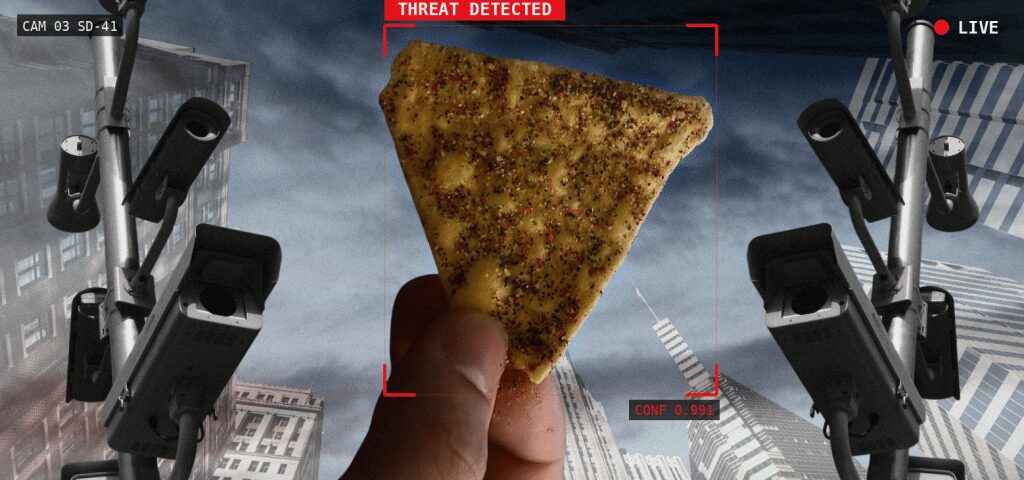
A recent incident involving a 16-year-old student at Kenwood High School has sparked significant community concern regarding the use of artificial intelligence in school safety protocols. Taki Allen was waiting for a ride home with friends after football practice when he was unexpectedly confronted by eight Baltimore County police vehicles.
Officers arrived with guns drawn, instructing Allen to kneel and placing him in handcuffs. The police action was prompted by an alert from the school's AI gun detection system, which mistakenly identified a crumpled bag of Cool Ranch Dorito chips in Allen's possession as a potential threat.
The event has raised alarms among residents, particularly regarding the implications of relying on AI systems that may perpetuate existing biases. Allen’s grandfather expressed deep concern, stating, "No one wants this to happen to their child," highlighting fears of disproportionate police responses to Black youth.
As schools across the nation consider investing millions in AI-based surveillance technologies, educators, parents, and community members are questioning the effectiveness and safety of such systems. Critics argue that these technologies are often built on biased datasets, which may endanger students rather than protect them.
During a City Council hearing, Baltimore officials discussed the implications of AI surveillance systems provided by companies like Evolv Technologies and Omnilert. These systems, which received SAFETY act designation from the U.S. Department of Homeland Security, have come under scrutiny for their potential to misidentify harmless objects as threats, as seen in Allen's case.
Baltimore City Councilman Mark Conway emphasized the lack of federal oversight in regulating these technologies, stating that municipalities are left to navigate complex safety claims without adequate support. He noted, "Cities are expected to vet complex AI systems and protect public interests without the necessary tools or authority."
Experts, including Chaz Arnett from the University of Maryland, echoed these concerns, criticizing local officials for their handling of the incident and the reliance on flawed technology. Arnett remarked on the broader implications of linking public safety to surveillance technology, urging a reevaluation of the community's faith in digital solutions for safety.
As discussions continue, the incident serves as a stark reminder of the potential dangers posed by AI in educational settings, particularly for marginalized groups. Parents and community leaders are now calling for greater accountability and oversight in the deployment of such technologies.
Reported by HarborBeat based on The Kansas City Defender (source).
0 Comments
Log in to join the conversation.