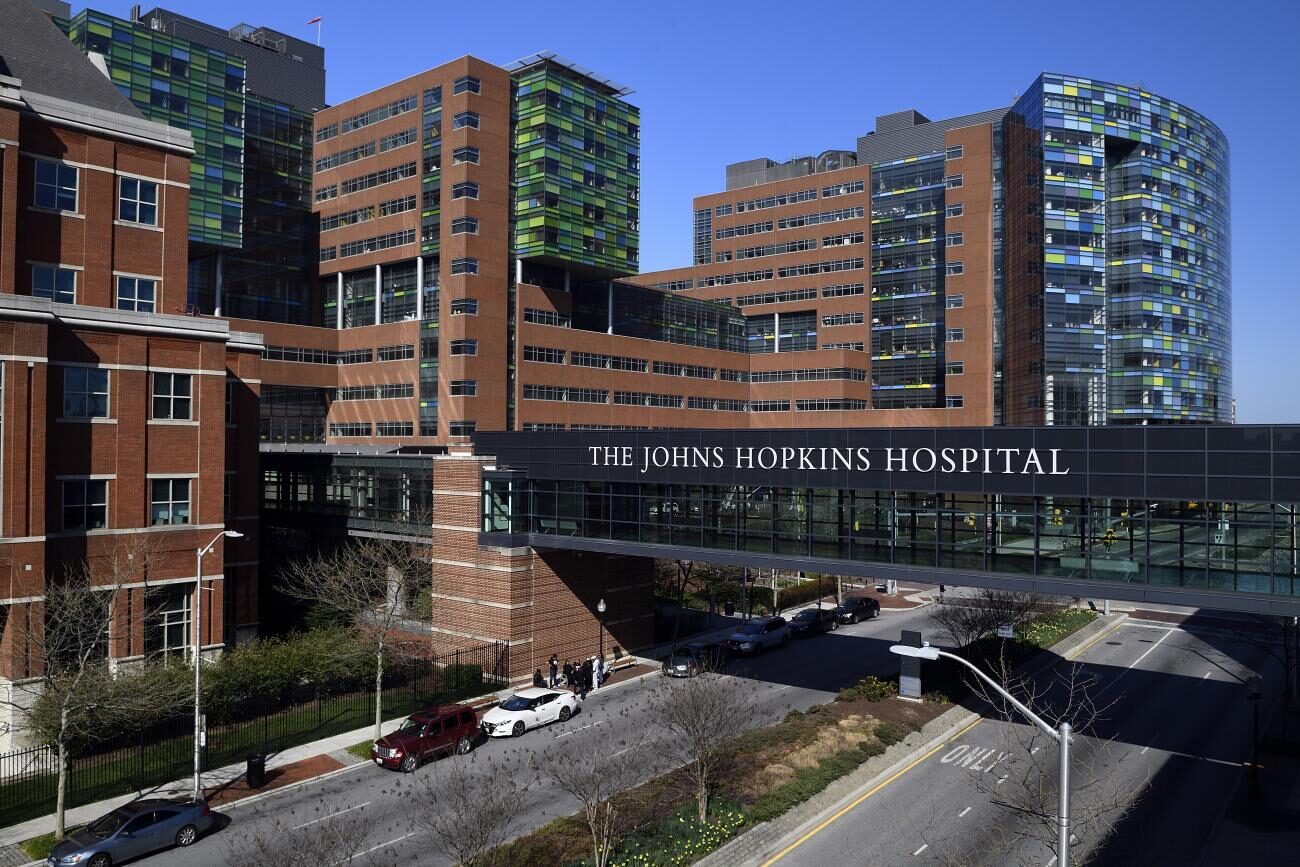
The Johns Hopkins Behavioral Health Crisis Support Team (BHCST) has officially expanded its services to the East Baltimore campus this week, enhancing mental health crisis support in the area.
This initiative, which pairs behavioral health clinicians with public safety officers, operates a 24/7 access line that was previously available only for the Homewood and Peabody campuses. Community members and affiliates can call 410-516-WELL (9355) to connect with a licensed crisis support clinician. If needed, a clinician-led co-response team will be dispatched to the caller's location.
Jennifer Howes, the chief mental health director for student health and well-being at Johns Hopkins University, emphasized the program's potential impact, stating, "For many, it can be a life-saving program. The impact of each one of those mobile responses can change the trajectory of someone's experience and get them into care much more quickly."
Initially launched in 2021 as a pilot program at the Homewood campus, the BHCST expanded to Peabody in 2022 before reaching East Baltimore. However, the introduction of the BHCST in East Baltimore will involve tailored adjustments to meet the community's unique needs, as noted by Jarron Jackson, assistant vice president for public safety.
Jackson explained, "One of the things that we were really intentional about is not just picking up what was done in Homewood or Peabody and transporting it to East Baltimore. Each campus has its own little community and has its own needs, wants, and desires." This approach ensures that the initiative is customized to effectively address the specific challenges faced by the East Baltimore community.
All clinicians involved in the BHCST are licensed mental health professionals trained in de-escalation and crisis counseling. Public safety officers are also trained in trauma-informed responses to ensure safety and confidentiality during in-person interventions.
After a crisis response, the BHCST facilitates connections to ongoing mental health support, either through the university or local resources like Baltimore Crisis Response, Inc.
Since its inception, the BHCST has handled over 250 crisis calls, with Jackson highlighting the program's profound impact on individuals. He recounted a moment at a suicide prevention event where a participant expressed gratitude for the program, stating, "If it wasn't for you, I wouldn't be here right now."
Individuals in need of behavioral health support on or near the Homewood, Peabody, and East Baltimore campuses are encouraged to reach out to the BHCST. Howes reiterated the program's commitment, saying, "If somebody is struggling and needs support during a crisis, we want to be there to answer that call."
For more information about mental health resources available to Johns Hopkins affiliates, visit the student well-being website or the Employee Assistance Program.
Mental health crisis and suicide prevention services are also available nationwide by dialing 988.
Reported by HarborBeat based on Johns Hopkins University (source).
0 Comments
Log in to join the conversation.